


News Center
Related Articles
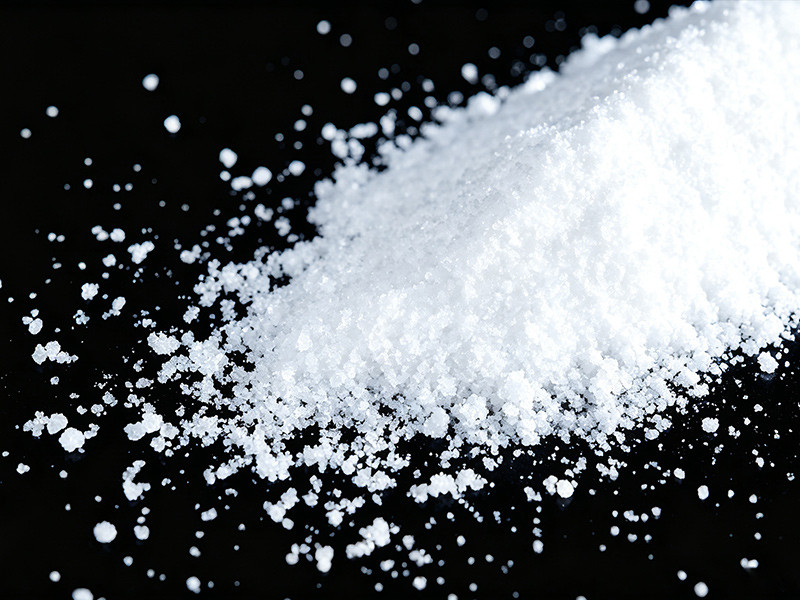
Thiourea is available in standard industrial grade, reagent grade, and high-purity grade. Many users easily confuse product grades and directly use industrial thiourea as a substitute for high-purity thiourea, resulting in a series of issues such as increased reaction by-products, defects in finished products, and distorted experimental data. The assay of high-purity thiourea typically reaches 99.5% or above, with trace impurities such as sulfate, chloride, iron, lead, other heavy metals, and water-insoluble matter being strictly controlled. It is an irreplaceable chemical raw material for process applications that are highly sensitive to impurities.
The electronics electroplating industry is one of the main application fields for high-purity thiourea. If residual heavy metals and salt impurities in standard industrial thiourea enter electronic plating baths, they will continuously accumulate, causing defects such as pinholes, haze, and reduced conductivity in the coatings of circuit boards and precision components. With its very low impurity content, high-purity thiourea can be added to electroplating systems as a brightener and grain refiner, ensuring uniform and dense coating crystallization and meeting the high-precision electroplating requirements of electronic components. For PCB circuit boards and precision hardware coating processes, high-purity grade should be selected as a priority and standard industrial thiourea must not be used as a substitute.
High-purity thiourea must also be used in scientific research laboratories and chemical analysis applications. In chemical analysis experiments, trace impurities can interfere with titration and complexation test results, leading to data deviations. Whether conducting research on precious metal complexation mechanisms or preparing standard laboratory solutions, high-purity thiourea can greatly reduce experimental errors caused by impurities and ensure reproducible experimental data. Standard industrial grade products contain complex impurities and are suitable only for rough processing tests, not for formal analytical testing.
Fine chemical and pharmaceutical intermediate synthesis fields also impose stringent standards on raw material purity. When thiourea is used as a core raw material to synthesize various thiourea derivatives, heavy metal impurities in the raw material can participate in catalytic side reactions, reduce product yield, and be carried into downstream pharmaceutical intermediates, increasing the difficulty of product purification. Selecting high-purity thiourea can reduce side reactions, simplify subsequent purification procedures, and improve product quality. In particular, pharmaceutical intermediate synthesis has clear requirements for heavy metal limits, and high-purity thiourea can better meet production control requirements.
Some high-precision precious metal extraction processes also use high-purity thiourea. Most conventional mineral processing industries use industrial-grade thiourea, but for leaching and recovery processes involving low precious metal content where the subsequent product is used in electronic materials, impurities can enter the metal product along with the leaching process and affect the purity of the finished metal. Under such special operating conditions, high-purity thiourea is required.
Of course, not all applications require high-purity thiourea. In processes such as conventional mineral beneficiation and general textile finishing, where tolerance for trace impurities is relatively high, industrial-grade thiourea is sufficient. Blindly purchasing high-purity products will significantly increase raw material costs and cause unnecessary waste.
It should be noted that high-purity thiourea must still be stored in a dry, well-ventilated environment to prevent moisture absorption and oxidation, thereby avoiding the secondary introduction of impurities. When purchasing, the complete quality inspection report should be reviewed, with particular attention paid to the actual measured values for heavy metals, sulfate, and chloride, to confirm that the specifications match the relevant process requirements.
In summary, the core advantage of high-purity thiourea lies in its strict control of trace impurities. High-purity-grade products should be selected for any application that is sensitive to heavy metals and salt impurities and pursues finished-product precision and experimental reliability. Products should be selected appropriately according to process requirements to balance product quality and production costs.
Leave Us a Message