


News Center
Related Articles
Within the chemical industry chain, there is a category of seemingly ordinary basic raw materials that runs through production processes across multiple industries. Thiourea is a representative chemical intermediate among them. Although many people may be unfamiliar with this name, production processes in electroplating, mineral processing, pharmaceuticals, textiles, and many other fields rely on thiourea.
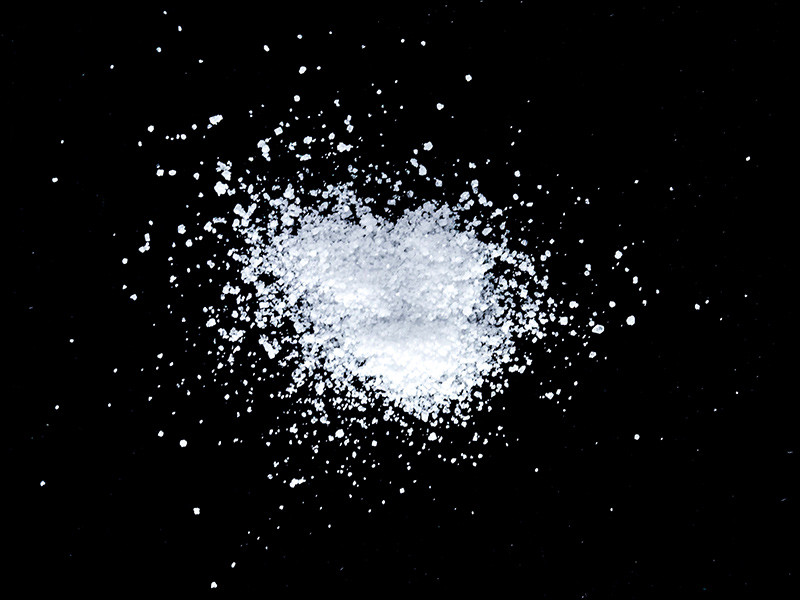
From a chemical perspective, thiourea has the molecular formula SC (NH₂)₂. It generally appears as white crystals or crystalline powder, is soluble in water, partially soluble in ethanol, and almost insoluble in ether. It is relatively stable at room temperature, but decomposes when heated or exposed to acidic or alkaline conditions, releasing sulfur-containing substances. This is a fundamental physicochemical characteristic that requires attention in actual production and use.
As an important chemical intermediate, an intermediate can be simply understood as an “intermediate bridge” in chemical production. It is rarely sold directly as a finished product; instead, it is mostly used as a raw material in subsequent synthesis and processing to be converted into other products. Thiourea plays exactly this role: it can be used directly as a process additive and can also serve as a precursor for synthesizing various derivatives, giving it a very broad range of applications.
The mineral processing industry is a classic application area for thiourea. Unlike conventional reagents, thiourea can be used in precious metal leaching processes. Under specific acidic conditions, it can form soluble complexes with metals such as gold and silver, enabling the extraction and recovery of precious metals. Compared with some conventional mineral processing reagents, it reacts faster under certain operating conditions. However, due to cost and process constraints, it is mainly used for processing specific ores and is not adopted by all mines.
In electroplating applications, thiourea is commonly added to electroplating bath systems as a brightener and leveling additive. Adding an appropriate amount of thiourea can improve the crystallization condition of the coating, reduce defects such as pinholes and roughness, and make the metal coating surface smoother and brighter. However, the dosage must be strictly controlled, as excessive addition can instead reduce coating performance. This is also a key point that must be controlled in frontline production.
In addition to industrial and mining applications, thiourea is also used in pharmaceuticals, textiles, agriculture, and other fields. In pharmaceutical synthesis, it is a raw material for synthesizing certain drug intermediates; in textile production, it can be used as an anti-wrinkle additive and bleaching reducing agent; in agriculture, it can be used in the preparation and processing of certain plant growth regulators. Different application scenarios have significantly different requirements for thiourea product grades, with standard industrial grade, reagent grade, and high-purity grade each suited to different operating conditions.
Thiourea is a chemical product, and safety regulations must not be overlooked in daily use. Direct human contact with the powder may irritate the skin and mucous membranes, so appropriate protection should be used during handling. Storage conditions should be kept dry and well ventilated, away from heat sources, and separate from strong acids and strong alkalis. Waste liquid generated during production and use must not be discharged directly at will; it should be treated in accordance with relevant regulations for hazardous chemical waste to reduce environmental impact.
Overall, although thiourea is not widely known to the general public, it is an indispensable component of the modern fine chemical industry. Only by understanding its fundamental properties and applicable limits can it be used appropriately in production selection and practical operations, thereby fully realizing the practical value of this chemical intermediate.
Leave Us a Message